Reviews
AMERICAN NOTES
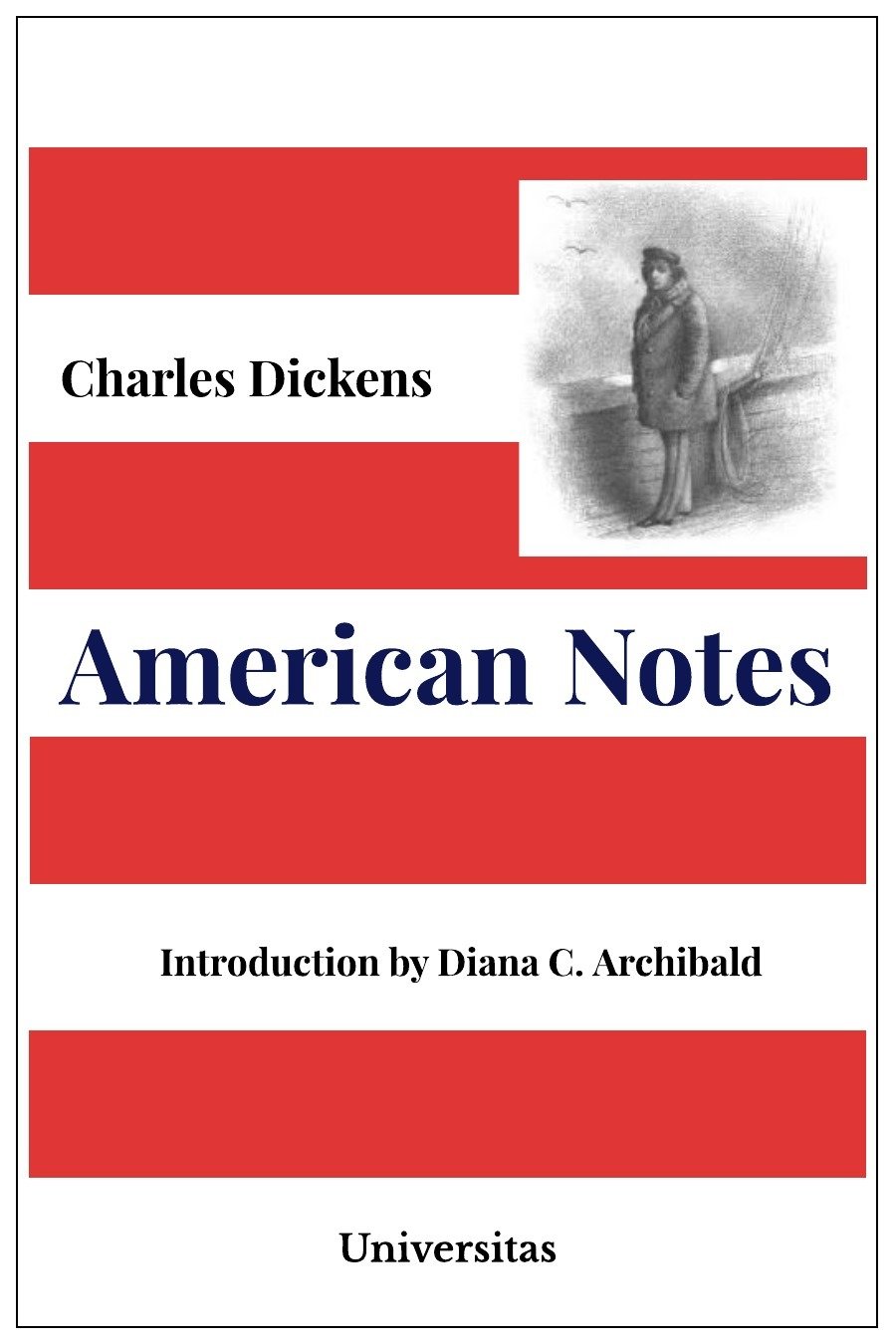
“This new edition, with an introduction by Diana Archibald, makes American Notes accessible for a new audience of students. Archibald restores not the bearded stern older man of the popular imagination, but a young man with silky hair and a penchant for showy dress. Indeed, he arrived in Boston in an enormous bearskin coat, which fans proceeded to pluck for souvenirs. It can be difficult to imagine a novelist having this kind of celebrity today, achieved largely through a bourgeoning newspaper and periodical press that made his American tour go viral long before the internet.”
“The edition's carefully chosen illustrations, introduction and extensive footnotes provide a valuable context for today's student. We learn about steam travel by boat, which was then new and hazardous, about the rash of American bank failures in 1837 to which the title (‘notes for general circulation’) alludes, and about the difficulties of emigration in the mid-nineteenth century. These historical themes are supplemented by contemporary illustrations of people and places ranging from the Lowell Mill factory girls to Tremont House in Boston to Niagara Falls. However, more information about the lack of international copyright laws is needed to situate Dickens and his work within a transatlantic nineteenth-century literary scene that found him immensely popular due to the wide availability of pirated editions of his work in America. Dickens's journey included stops in Toronto, Kingston, Montreal and Quebec. More context on what was then British North America, and how Dickens's journey intersected with these regions, would further enhance the edition’s usefulness.”
Bourrier, Karen. Review of American Notes for General Circulation, by Charles Dickens, ed. Diana Archibald. Dickens Quarterly, vol. 36, no. 4, 2019, pp. 369–371. Project MUSE, https://dx.doi.org/10.1353/dqt.2019.0042.
LIKE A CHILD WOULD DO
“This necessitous book explores evolving perspectives on the child, the childish and childlike, in children, adolescents, and the emerging marketplace-induced categorizations of quasi-adults engaging in immature consumption, such as kidults and playborers, while acknowledging their interwoven and co-evolving relationship with society. This book delivers on its exciting premise... drawing from Chinese fiction, Shakespeare, art, consumer culture, and psychoanalysis, [it] will be thought provoking for readers across the social sciences.”
O’Sullivan, S. (2023). Review of Like a Child Would Do: An Interdisciplinary Approach to Childlikeness in Past and Current Societies, edited by Mathieu Alemany Oliver and Russell W. Belk. Consumption Markets & Culture, 26(2), 168–174. https://doi.org/10.1080/10253866.2023.2171796
GOTHIC AND RACISM, 2ND EDITION
“ It is surprising, then, that few full-length and wide-ranging studies of gothic and racism exist, and still more so given that gothic first appears in an ‘Enlightened’ and industrialising Britain culturally and materially powered by histories of enslavement and colonisation. A collection broadly titled Gothic and Racism would be well-placed to address how, from its inception, gothic registers, elides, colludes with or critiques a world produced by racialised systems of power, and, encouragingly in this respect, Artenie's volume is fuller in historical and regional scope than most existing analogous studies. The book covers the period from the 19th to the 21st centuries and includes chapters on Britain, Russia, Canada, the Caribbean, India and the United States. It also adopts a productively generous definition of gothic forms, moving between readings of highly canonised texts such as Dracula (which appears twice as a focus), to analyses that shed light on gothic aspects in fictions – Sholem Abramovitch's The Mare, Richard Wright's Native Son – less often categorised in this way.”
Duncan, Rebecca. "Gothic and Racism – A Review." Critical Quarterly, vol. 66, no. 3, 2024, pp. 168–174. Wiley Online Library, https://doi.org/10.1111/criq.12803.
DRACULA: THE POSTCOLONIAL EDITION
"This edition of Bram Stoker's novel Dracula (The Postcolonial Edition) is one of the best currently available for use in the classroom. It provides an excellent context for the work in the introduction, and it includes ample footnotes which explain events within the novel, as well as in contemporary European politics, history, geography, folklore, etc. Over the past six years, students in my undergraduate Vampire course have found the work extremely useful for their research and discussions."
James Doan, professor at Nova Southeastern University
DRACULA: THE POSTCOLONIAL EDITION
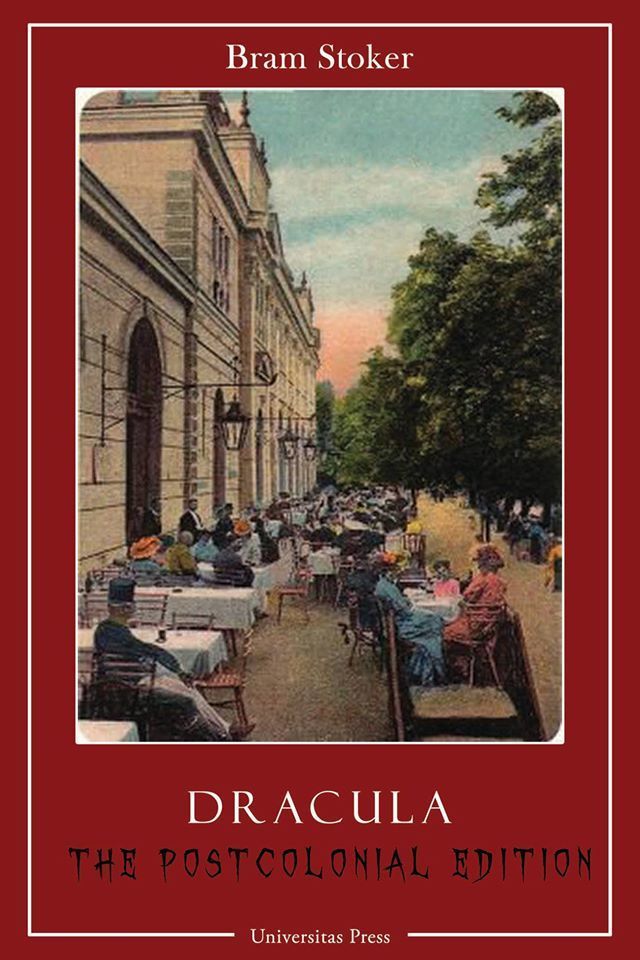
“Universitas Press’ publication of Dracula: The Postcolonial Edition, edited by Cristina Artenie and Dragos Moraru, is one of the most significant editions of Dracula ever produced. [...] To me, the greatest strength of this edition is the simple history lesson it provides into Romania and what it really was like in the 1890s. Photographs are provided showing hotels in Romania at the time that were up to par with other fine European hotels. Much of the technology in the novel is treated as if it solely belongs to the West, ranging from shorthand to photography, yet the editors of this edition show that photography in Romania had been prominent and advanced decades earlier and shorthand was regularly used.”
“Another interesting aspect of this edition is that it reveals how Stoker not only argues for Western and especially British superiority but also the superiority of the upper classes. The editors point out that the English lower class characters are just as superstitious as the Romanians. Furthermore, the lower classes, like the Romanians, and even a Jewish character, continually must be bribed so the main characters can make progress in discovering Dracula’s whereabouts. By comparison, an English gentleman, the consulate clerk, whom the main characters encounter at Galatz, willingly helps them.”
Tichelaar, Tyler R. “Postcolonial Edition of Dracula Fills in Gaps and Dispels Myths About Eastern Europe.” The Gothic Wanderer, 26 February 2020.
https://thegothicwanderer.wordpress.com/2020/02/26/racism-in-dracula-the-romanian-perspective/
DRACULA INVADES ENGLAND
“Artenie argues that Dracula, like Heart of Darkness, is a novel about colonization, and although that argument might seem a bit surprising at first, she makes a compelling case. She points out how the novel is full of references to Romanian products, especially grain, and how the fear of Dracula is essentially the fear of the East invading the West. She even goes so far as to show how the bloodline of Vlad Tepes actually becomes part of the British royal family when Queen Mary, the wife of George V, has lineage going back to the Dracula family. The book also offers an intelligent discussion of the Victorian readership of Dracula and how Stoker’s work was interpreted by them, including the significance of serialization, the role of periodicals, and the expectations of Victorian readers. It is high time that Romanian voices are heard as part of the discourse on Dracula and that Stoker’s depiction of them as the ‘Other’ receives critical attention.”
Tichelaar, Tyler R. “Racism in Dracula: The Romanian Perspective.” The Gothic Wanderer, February 26, 2020.
https://thegothicwanderer.wordpress.com/2020/02/26/racism-in-dracula-the-romanian-perspective/